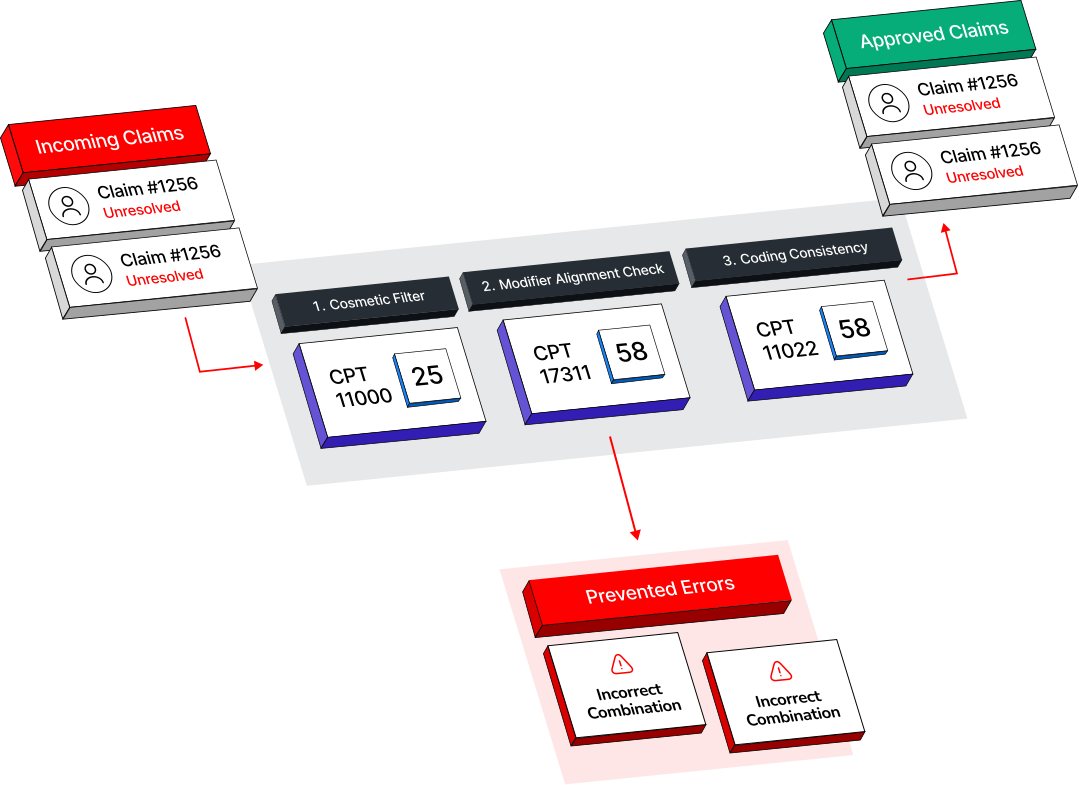
Your patients often drive in from two or three counties away. One visit turns into a full skin exam, several biopsies, lesion destruction, and pathology to track down, and each of those carries its own modifiers and specimen counts that have to land right the first time. Most specialty capacity sits in Chittenden County, around Burlington, South Burlington, and Essex Junction, while Rutland, Bennington, and St. Johnsbury serve as referral points for the surrounding region. We build our scrub rules around dermatology claims specifically, so those patterns get caught before submission, with same-day filing.
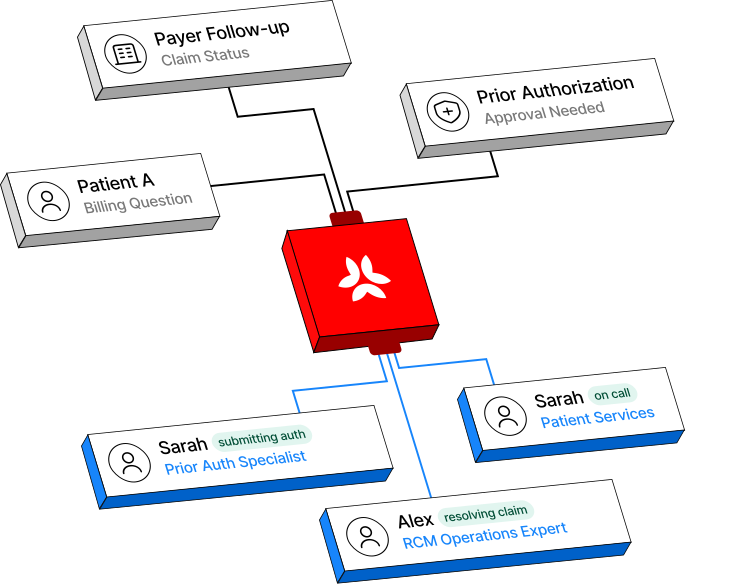
Your billing team is a named account manager plus a pod, reporting directly to you. Your existing A/R becomes our responsibility from day one, so nothing sits stalled while we ramp up, and you can see where claims stand without waiting on a call to find out. That holds whether you run one location in Barre or see patients across Montpelier and Middlebury: the point of contact and the reporting stay consistent, and every staffing and payer decision stays with you.
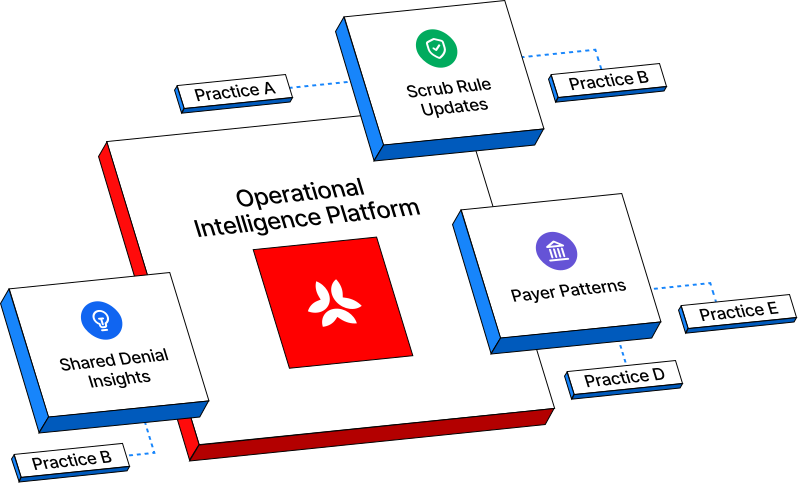
Beyond billing, we bring benchmarks from top-performing dermatology groups, help with credentialing, and work through payer strategy as plans and networks shift. Practices in Brattleboro, Winooski, and Williston get that same partnership, with visibility into how their numbers compare to peers doing the same work elsewhere. Onboarding takes 3 to 6 weeks and happens inside your practice's existing EMR. We're SOC 2 Type II certified and HIPAA compliant.








 Love
Love