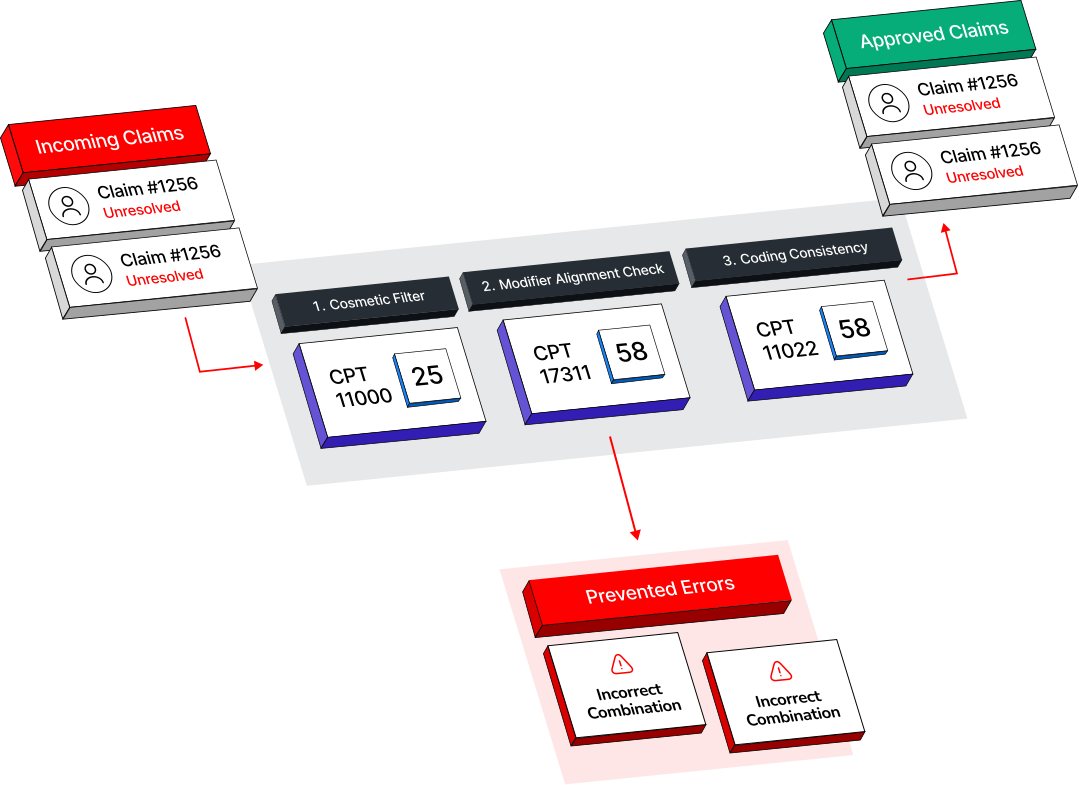
Ohio dermatology practices we work with sit in Columbus, Cleveland, Cincinnati, Toledo, Canton, Youngstown, Springfield, and Newark. All of them work the same mix of Medicare, Medicare Advantage, regional Blues, and commercial plans. We work exclusively with dermatology practices, so we've already seen the coding and payer patterns behind your claims across hundreds of other groups. That volume lets us tune scrub rules to your payer mix and catch issues before they become denials, not after.
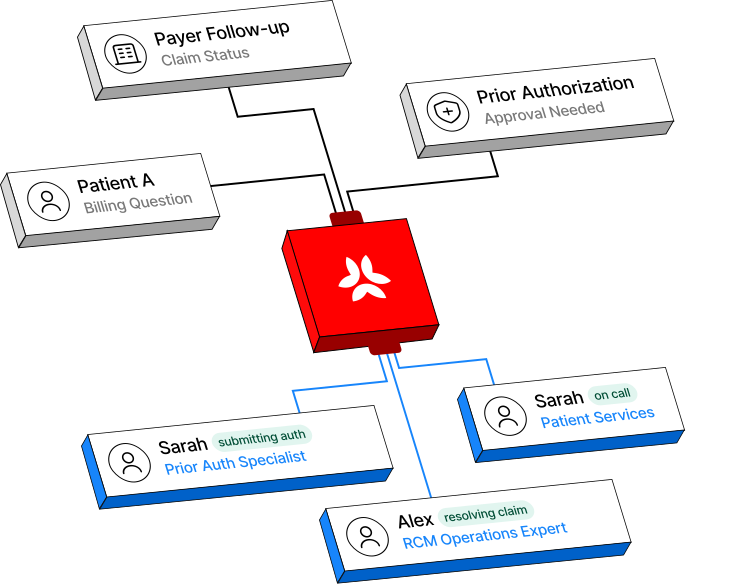
Many Ohio dermatology practices we work with run two businesses under one roof: medical visits billed to insurance, and a cash-pay cosmetic line in injectables, lasers, and skincare that closes out at the front desk, in suburbs like Dublin, Beachwood, and Mason. A named account manager and dedicated pod track both sides separately for you. That means you see what insurance actually collected instead of an estimate, and you can staff and schedule off real numbers rather than a guess.
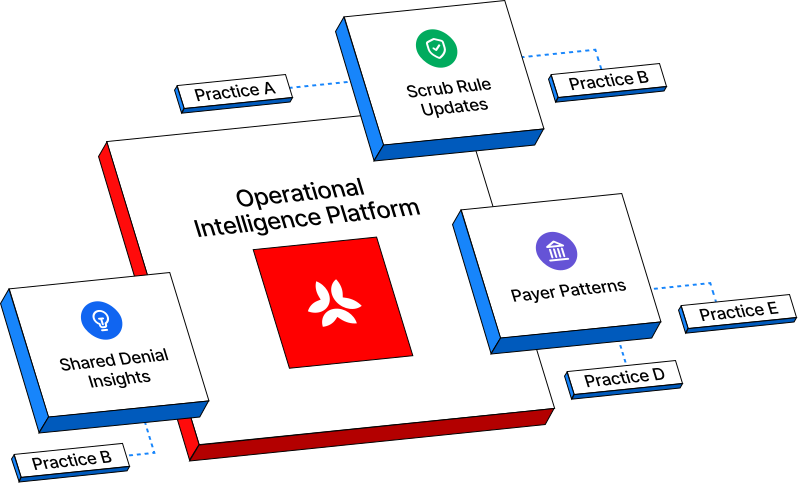
Beyond day-to-day claims work, we apply performance benchmarks drawn from other dermatology practices we serve, plus support with credentialing and payer strategy. Your documentation stays audit ready, so a payer review does not catch you off guard. On day one, we take over your open A/R, then get you live inside ModMed, eClinicalWorks, Nextech, DrChrono, or EZDERM within three to six weeks. Everything runs under SOC 2 Type II and HIPAA controls. Across the practices we serve nationally, that adds up to a 97% net collection rate and 27-day average A/R.







 Love
Love