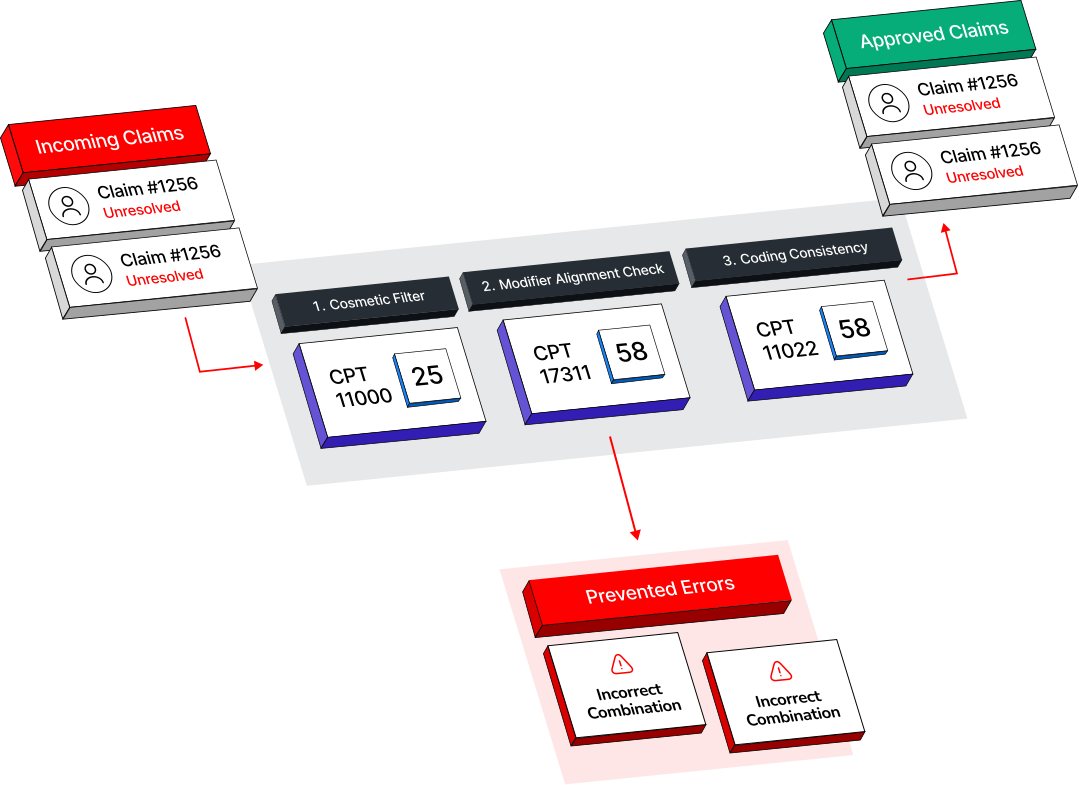
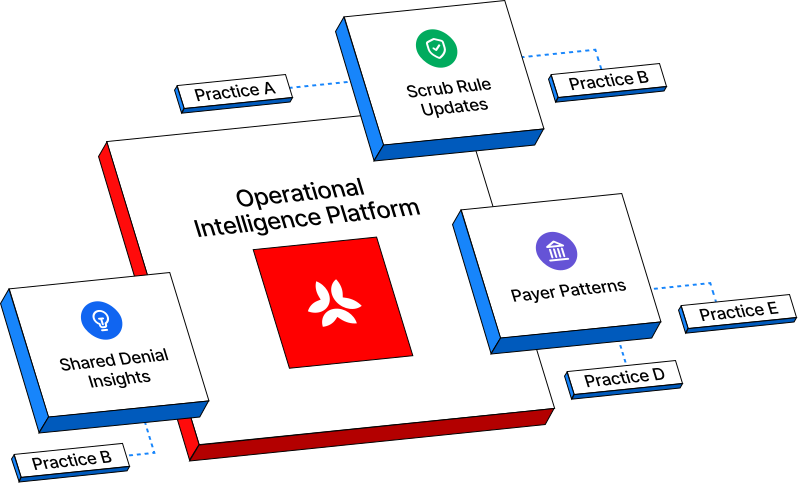
Your patients already make the drive: Front Range corridor from Fort Collins to Colorado Springs, or the longer haul in from Grand Junction and the Western Slope. We built our billing team the same way. Dermatology only, across 205 practices and 42 states, so patterns in your claims, lesion counts, biopsy versus destruction, which Mohs stage belongs on which date, get caught before they become denials. That focus is why we hold a 97% net collection rate and a 98% clean claim rate. We act as your financial partner, not your billing vendor.
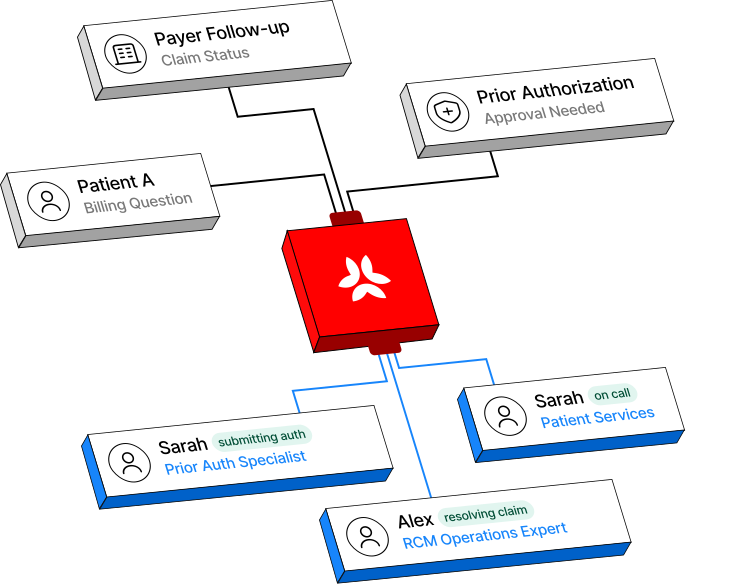
You get a named account manager and a pod dedicated to your account, never a rotating queue of unfamiliar reps. Claims get reviewed before submission, issues get flagged early, and you receive reporting that shows exactly where your revenue stands, so you stay in command of the practice without becoming the biller yourself. Owners running satellite days in Greeley, Pueblo, or Loveland feel the difference: a documentation question from a Tuesday clinic in Grand Junction gets the same-day attention as one from your main office on the Front Range.
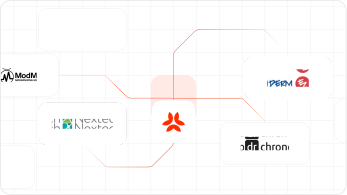
We work inside whatever your practice already uses: ModMed, eClinicalWorks, Nextech, DrChrono, or EZDERM. Switching EMRs is never part of the conversation. When you come on board, day one starts with us assuming ownership of your existing A/R, and you're live within 3 to 6 weeks. Beyond the claims themselves, we bring benchmarks from top derm groups and support on credentialing and payer strategy. Our systems are SOC 2 Type II certified and HIPAA compliant.








 Love
Love